review by John W. Herbert
This new 3-DVD set consists of two shows by The Who.
Disc One is a performance of Tommy from a charity show in LA, one of two complete Tommy performances from the 1989 tour. The Who were in what I call their "Las Vegas" phase: a 15-piece band, including a horn section. Special guests for this show included Patti LaBelle, Phil Collins, Steve Winwood, Billy Idol and Elton John. This certainly isn’t the "classic" Who of yore. Townshend plays acoustic guitar throughout and the horns certainly add a new twist to the music. But there’s no question whatever their configuration that this is a group of excellent musicians clearly enjoying themselves. The musical highlight is John Enwhistle’s bass solo during Sparks.
Disc Two is a performance of Quadrophenia from a 1996 tour. Again another large band, this time augmented by a visual presentation and guests P.J. Proby as The Godfather and Billy Idol as Ace the Face. Again Townshend sticks mostly to the acoustic guitar and the band is in fine form. This time the musical highlight is John Entwistle’s bass solo on 5:15. (Okay, yes, you caught me. I’m a bass player.)
The third disc consists of the LA show’s second set and encore, an extended encore from the Quadrophenia show, and three songs from Giants Stadium from 1989. No big musical surprises here, except the Quadrophenia encore opens with an acoustic version of Won’t Get Fooled Again, and features a slightly reworked version of Who Are You.
Both the Tommy and Quadrophenia shows have a "visual commentary" track by Roger Daltrey and Pete Townshend, both of which are excellent. Controlled by the "angle" button, you can turn the commentary on and Pete or Roger appear on the screen, commenting on the concert, the music, the story, or whatever strikes their fancy. A must-watch for Who fans.
The viewer is alerted to the start of these segments by a pinball flashing superimposed on the screen in the case of Tommy, or a mod target symbol in the case of Quadrophenia. The downside is that the commentary segments start and stop all the time during the performances, and the viewer is constantly distracted by large flashing round objects in the middle of the screen distracting from the concert. Why didn’t the DVD producers put a less distracting and smaller symbol in the corner of the screen that doesn’t interfere with the enjoyment of the concert to signal the beginning of a commentary segment? Beats me, I guess that’s why they make the big bucks. Note to Rhino Records: Never do that again.
Showing posts with label music. Show all posts
Showing posts with label music. Show all posts


The Transformed Man by William Shatner and Mr. Spock’s Music From Outer Space by Leonard Nimoy
reviewed by John W. Herbert
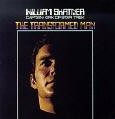
These legendary albums, both recorded during the filming of the original Star Trek in the late 1960s, have been recently reissued on CD by Varese Sarabande Records. (Please don’t send them hate mail. They put out some good stuff, too.) It goes without saying that William Shatner’s versions of “Lucy in the Sky with Diamonds” and “Mr. Tambourine Man” are the stuff that nightmares legends are made of (if John Lennon wasn’t already dead, listening to this would probably kill him), but when one listens to all of The Transformed Man, one gets the sense that Shatner is at least trying to make a statement of some kind. It’s a shame no one, probably including Shatner, knows just what the hell it is. Shatner recites some poetry and text pieces (including three Shakespeare pieces) against orchestral backdrops, which mysteriously segue into spoken-word versions of 1960s pop songs. Some of the text pieces are nearly effective, and the liner notes claim that the pieces are thematically linked. Yeah, right. But at least give Shatner credit for trying something different, and for not attempting to actually sing.
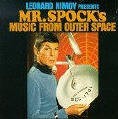
Leonard Nimoy, on the other hand, has no excuse. He does sing, and the results are even more excruciating than Shatner smarming his way through “It Was a Very Good Year.” Shatner’s album is at least funny (in the Ed Wood sense), whereas Nimoy’s album is just painful (in the Irwin Allen sense). His album consists of lame instrumentals, terrible readings, and actual singing (only in the strictest of definitions). While both albums are examples of commercialism at its most crass, Nimoy goes a step further than Shatner by prostituting the Spock character by his performing some truly hideous Spockian soliloquies. And sadly, although some bonus tracks are included, Nimoy's "The Ballad of Bilbo Baggins" is does not appear in this collection of songs (and I'm using the word loosely).
If you, like me, are a fan of “it’s so bad, it’s good” stuff, then the Shatner CD is must. Nimoy’s is just painful.
Originally published by Under the Ozone Hole Number Fourteen – June, 1996
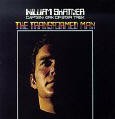
These legendary albums, both recorded during the filming of the original Star Trek in the late 1960s, have been recently reissued on CD by Varese Sarabande Records. (Please don’t send them hate mail. They put out some good stuff, too.) It goes without saying that William Shatner’s versions of “Lucy in the Sky with Diamonds” and “Mr. Tambourine Man” are the stuff that nightmares legends are made of (if John Lennon wasn’t already dead, listening to this would probably kill him), but when one listens to all of The Transformed Man, one gets the sense that Shatner is at least trying to make a statement of some kind. It’s a shame no one, probably including Shatner, knows just what the hell it is. Shatner recites some poetry and text pieces (including three Shakespeare pieces) against orchestral backdrops, which mysteriously segue into spoken-word versions of 1960s pop songs. Some of the text pieces are nearly effective, and the liner notes claim that the pieces are thematically linked. Yeah, right. But at least give Shatner credit for trying something different, and for not attempting to actually sing.
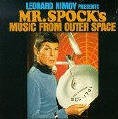
Leonard Nimoy, on the other hand, has no excuse. He does sing, and the results are even more excruciating than Shatner smarming his way through “It Was a Very Good Year.” Shatner’s album is at least funny (in the Ed Wood sense), whereas Nimoy’s album is just painful (in the Irwin Allen sense). His album consists of lame instrumentals, terrible readings, and actual singing (only in the strictest of definitions). While both albums are examples of commercialism at its most crass, Nimoy goes a step further than Shatner by prostituting the Spock character by his performing some truly hideous Spockian soliloquies. And sadly, although some bonus tracks are included, Nimoy's "The Ballad of Bilbo Baggins" is does not appear in this collection of songs (and I'm using the word loosely).
If you, like me, are a fan of “it’s so bad, it’s good” stuff, then the Shatner CD is must. Nimoy’s is just painful.
Originally published by Under the Ozone Hole Number Fourteen – June, 1996
Tippi Agogo
reviewed by E.B.Klassen
Well, we’re just back from the Edmonton Fringe Festival - one of the more effective money filters we walk through in the summer. The Edmonton Fringe is huge - a day with less than twenty thousand people is a slow one. But after seeing the Arrogant Worms play a street gig, there wasn’t a whole lot else we wanted to see (at least not with the kids in tow). We wandered though the streets of people sampling all the different foods and chatting to whomever we happened upon. The last couple of days have been cold and rainy, and while we were watching a clown duo, a cold threatening wind blew up. The duo turned the tip early as everyone was starting to leave anyway. We joined the exodus and headed towards the truck. But as we rounded a corner we heard a sound. A strange polyrhythmic noise sculpture. A noise that proved that there is a god, and his name is Tippi Agogo.The last time I saw Tippi was in Victoria at the Fringe. He was performing in Market Square and having a wonderful time. I had first heard him about three weeks earlier at the Edmonton Fringe and bought both his tapes and the T-shirt. He remembered me and we talked about not much in particular. Since then we’ve listened to his last two Morningside interviews and heard about his trip to Europe. But for the last year or two I’d lost track of him.Tippi comes from the future; in particular, the future of Neuromancer. Street musicians from Bill Gibson’s future are all modeled on Tippi. He uses garbage to create the wildest sounds I have ever heard. Tonight it was two shampoo bottles on sticks, a drum made from a cardboard barrel, a pan pipe made from drinking straws, a squeaker from a kid’s toy, and miscellaneous other stuff. There was also a small amp and a couple of mikes and a digital delay.Tippi creates rhythms, loops them with the digital delay, and stacks other rhythms on top, then plays more rhythms overtop of the result. Banging the shampoo bottles on coffee cans creates some of the rhythms, some are created simply with his voice. The result sounds anarchic and wild, but he maintains a consummate control over them. The madness is eminently danceable.The recordings I have (including the two new CDs) don’t have quite the wild abandon that explodes from the live performance. Live, Tippi is a major hit at the Fringe, the Street Performers Festival, and the Children’s Festival. His mother is apparently a professor of musicology at the University of Alberta, and Tippi has formal training in his background. But training does not define his music, it supports it. Tippi draws freely from Eno’s ideas of ambient music, African tribal music, and the pop music of the last thirty years. But these are only influences.Musically, Tippi Agogo remains resolutely himself.
Well, we’re just back from the Edmonton Fringe Festival - one of the more effective money filters we walk through in the summer. The Edmonton Fringe is huge - a day with less than twenty thousand people is a slow one. But after seeing the Arrogant Worms play a street gig, there wasn’t a whole lot else we wanted to see (at least not with the kids in tow). We wandered though the streets of people sampling all the different foods and chatting to whomever we happened upon. The last couple of days have been cold and rainy, and while we were watching a clown duo, a cold threatening wind blew up. The duo turned the tip early as everyone was starting to leave anyway. We joined the exodus and headed towards the truck. But as we rounded a corner we heard a sound. A strange polyrhythmic noise sculpture. A noise that proved that there is a god, and his name is Tippi Agogo.The last time I saw Tippi was in Victoria at the Fringe. He was performing in Market Square and having a wonderful time. I had first heard him about three weeks earlier at the Edmonton Fringe and bought both his tapes and the T-shirt. He remembered me and we talked about not much in particular. Since then we’ve listened to his last two Morningside interviews and heard about his trip to Europe. But for the last year or two I’d lost track of him.Tippi comes from the future; in particular, the future of Neuromancer. Street musicians from Bill Gibson’s future are all modeled on Tippi. He uses garbage to create the wildest sounds I have ever heard. Tonight it was two shampoo bottles on sticks, a drum made from a cardboard barrel, a pan pipe made from drinking straws, a squeaker from a kid’s toy, and miscellaneous other stuff. There was also a small amp and a couple of mikes and a digital delay.Tippi creates rhythms, loops them with the digital delay, and stacks other rhythms on top, then plays more rhythms overtop of the result. Banging the shampoo bottles on coffee cans creates some of the rhythms, some are created simply with his voice. The result sounds anarchic and wild, but he maintains a consummate control over them. The madness is eminently danceable.The recordings I have (including the two new CDs) don’t have quite the wild abandon that explodes from the live performance. Live, Tippi is a major hit at the Fringe, the Street Performers Festival, and the Children’s Festival. His mother is apparently a professor of musicology at the University of Alberta, and Tippi has formal training in his background. But training does not define his music, it supports it. Tippi draws freely from Eno’s ideas of ambient music, African tribal music, and the pop music of the last thirty years. But these are only influences.Musically, Tippi Agogo remains resolutely himself.
Subscribe to:
Posts (Atom)